Corina-Ruxandra Deacu
Stefania Gardoni

Stefania earned her Bachelor’s and Master’s single-cycle degree in Medicinal Chemistry with honours from the University of Pavia, Italy. For her Master’s thesis, she collaborated with Queen Mary University of London on a project focused on the formation mechanisms of metal-based nanocatalysts applied to green chemistry processes. Currently, she is part of the CDT in Transformative Pharmaceutical Technology, where her research involves designing targeted IR-II absorbing dyes for photoacoustic imaging of glioblastoma, under the secondary supervision of Dr Maryam Parhizkar and Dr Racheal Dickman at UCL School of Pharmacy.
Matilde Brunetta

Matilde received her MSci in Chemistry at Imperial College London in 2023. Her master project was on tuning perovskite composition for filter less photodetectors, more specifically she systematically studied how different percentages of lead iodide passivate the perovskite active layer. From October 2023, she is part of the 10th Cohort of the Advanced Characterisation of Materials CDT. Her research, co-supervised by Dr. Nicola Gasparini of Imperial College London, will focus on the synthesis of organic semiconducting molecules and the fabrication of near-infrared organic solar cells.
Chao Lyu
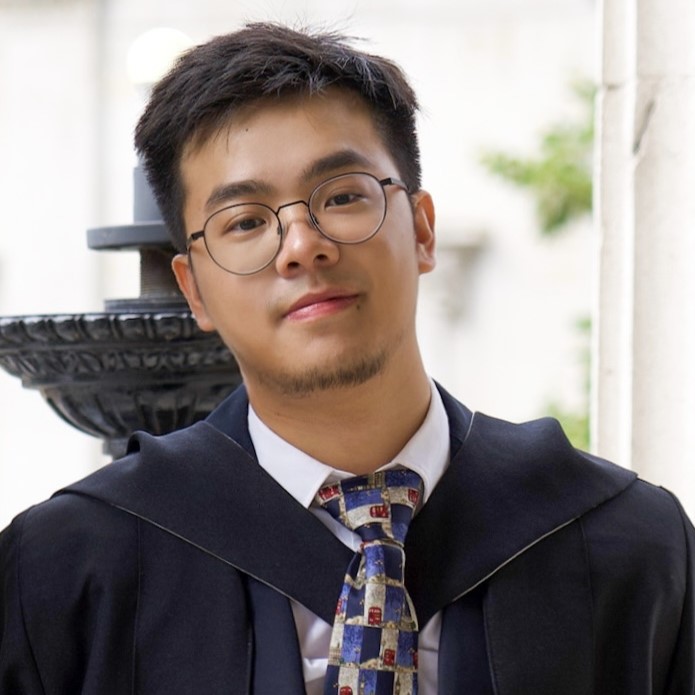
Chao completed his MRes in Organic Chemistry: Drug Discovery at the University College London. Under the guidance of Professor Alethea Tabor, Chao undertook the design of a set of innovative peptidomimetic inhibitors targeting the SARS-CoV-2 main protease through molecular docking. He subsequently synthesized and validated a promising compound via FRET screening.
Chao’s current research, co-supervised by Professor Alethea Tabor, is centred on the development of biocompatible electronic materials that can interact with biological systems. His approach involves the fusion of self-assembling peptides with soluble semiconducting organic polymers.
Mingyu Zhou
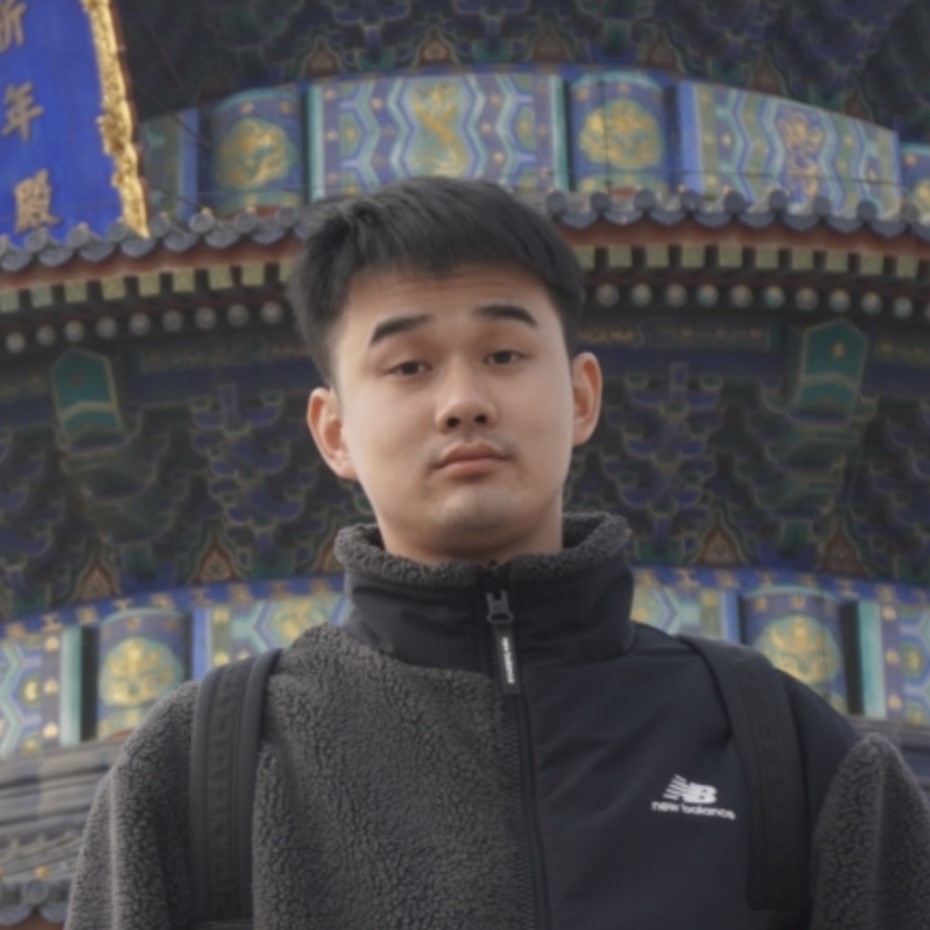
Mingyu earned his Master’s degree in Material Science with distinction from the University of Manchester. His dissertation was dedicated to the development of a novel composite for hydrogen storage applications. Presently, his research centres around integrating organic semiconductors into skin-wearable sensors for healthcare monitoring.
Rikin Shah
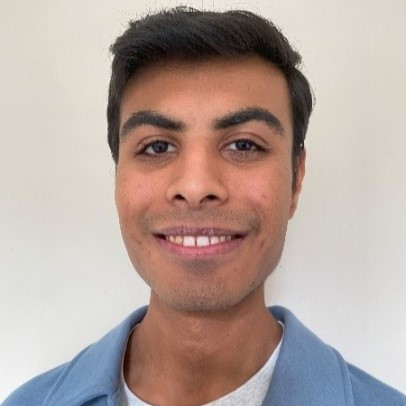
Rikin received his MSc for Chemical Research from University College London; where his project focused on shifting absorption to the near-infrared (NIR) region of isoindigo based structures for photoacoustic imaging. Previously, he completed a BSc in Pharmaceutical Chemistry from Queen Mary University of London, graduating with First Class (Hons) in 2022. His undergraduate dissertation project involved the functionalisation and characterisation of materials based on semiconducting fullerenes for photovoltaic and organic electrochemical transistor (OECT) applications, under the supervision of Dr Christian Nielsen. His current research, co-supervised by Prof Jamie Baker; focuses on developing an organic semiconductor with high selectivity for specific metabolites as part of health monitoring. A project that is funded by a competitive research bursary from the UCL department of chemistry.
Aisha Mumtaz

Aisha received her MSci in Chemistry from University College London where her project involved the synthesis and photochemical characterisation of bimetallic Ru-Pt complexes for photodynamic therapy, jointly supervised by Dr Rebecca Ingle and Dr Clare Bakewell. She previously completed a 3rd year summer research project within the group during the summer of 2020, exploring the use of density functional theory to computationally model different interactions of organic semiconducting materials, funded by a competitive research bursary from the UCL Chemistry department.
Her current research, co-supervised by Dr Rebecca Ingle, involves the design and synthesis of novel, chiral organic semiconductors and the investigation of their photoinduced behaviour with ultrafast spectroscopic techniques.
Jessie Liu
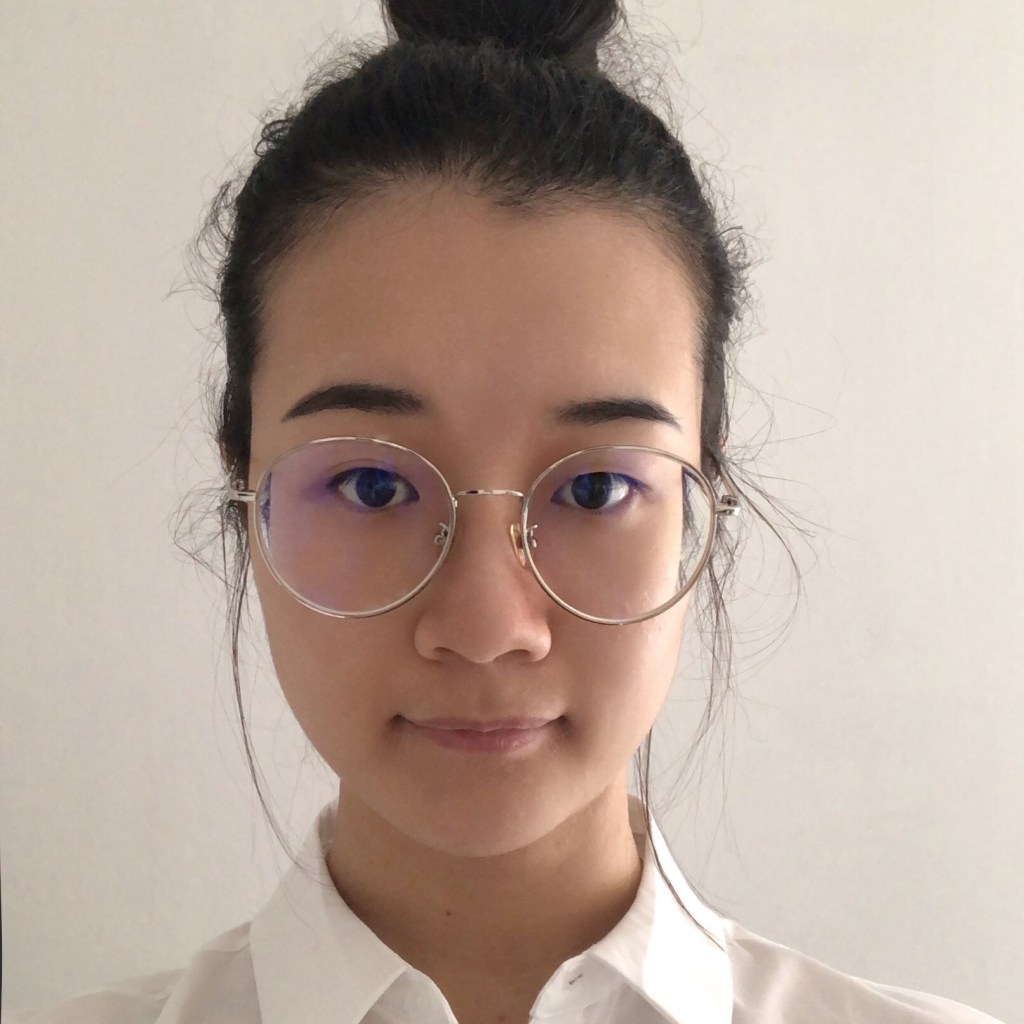
Jessie received her MSci in Chemistry from University College London (UCL). Her master project was altered from experimental to computational due to COVID, therefore, her dissertation focused on the analysis of the properties of quadruple hydrogen bonding systems for self-healing materials through density functional theory (DFT). She graduated with a first and was awarded on the UCL MAPS Faculty Dean’s List for 2021. Her current research focuses on integrating self-healing properties into organic semiconductors through metal-ligand coordination bonds for potential employment in wearable electronics.
Ana-Maria Ivanus

Ana is a BBSRC-funded PhD student, part of the London Interdisciplinary Doctoral Programme’s 2020 cohort. Her current work focuses on developing radio-labelled responsive fluorophores to elucidate the role of MMP in ageing, and she is co-supervised by Dr Graeme Stasiuk and Prof. Alethea Tabor.
Ana received an MSci in Natural Sciences – Synthetic Organic Chemistry & Biomedical Sciences from UCL. As a previous member of the group, she completed both a 3rd-year summer research project (funded by the Royal Society of Chemistry bursary) and an MSci project on the synthesis of bioconjugated organic semiconductors for photoacoustic imaging. She also spent the summer of 2018 at the University of Oxford, working on new chemistry for molecular motors in the group of Prof Hagan Bayley FRS.
Senior Stress Relief Specialist
Wilson
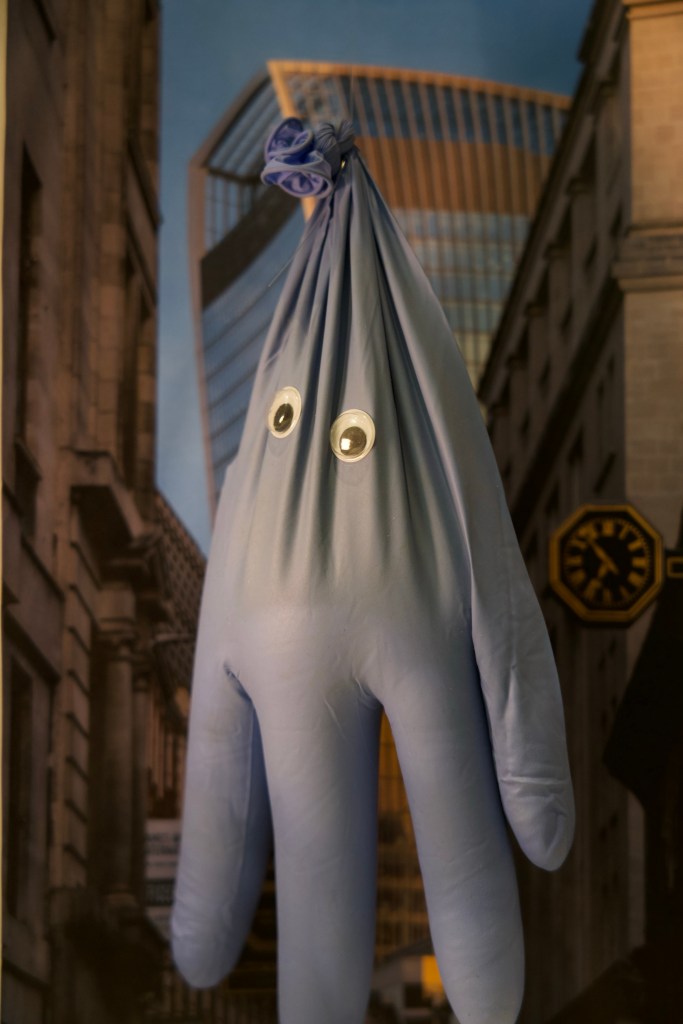
Wilson represents the pinnacle of modern lab equipment evolution: part safety gear, part therapist, part inexplicably calming presence. This hydrogel-enhanced nitrile professional joined our team when someone accidentally discovered that overfilled gloves make excellent sensory stress-relief toys and decided to make it official.
Specialising in passive emotional support and active squish therapy, Wilson has revolutionised our approach to lab-induced panic attacks. Their innovative “squeeze-and-release” methodology has been proven to reduce cortisol levels and increase productivity during particularly soul-crushing experiments.
Wilson’s impressive resume includes surviving multiple rounds of “will it blend?” testing by curious researchers, maintaining structural integrity under extreme squeezing conditions, and never once complaining about being mistaken for actual lab equipment.
 Schroeder Research Group